

You may be embarking on Invisalign therapy, and you are likely to pose the same practical question that every new customer poses, which is; can you eat with Invisalign? Most of the time, the response will be no- before eating food you should take out Invisalign. The one habit will help keep your Invisalign aligners safe, limit the chances of tooth decay, and make your orthodontic treatment schedule.
Due to the nature of the Invisalign (also known as the invisible aligners), your daily routine will be more important than with the traditional metal braces. Luckily, after understanding the remove, eat, clean, reinsert process, it is no problem eating with Invisalign, it is foreseeable.
Is it possible to eat with the use of Invisalign Aligners?
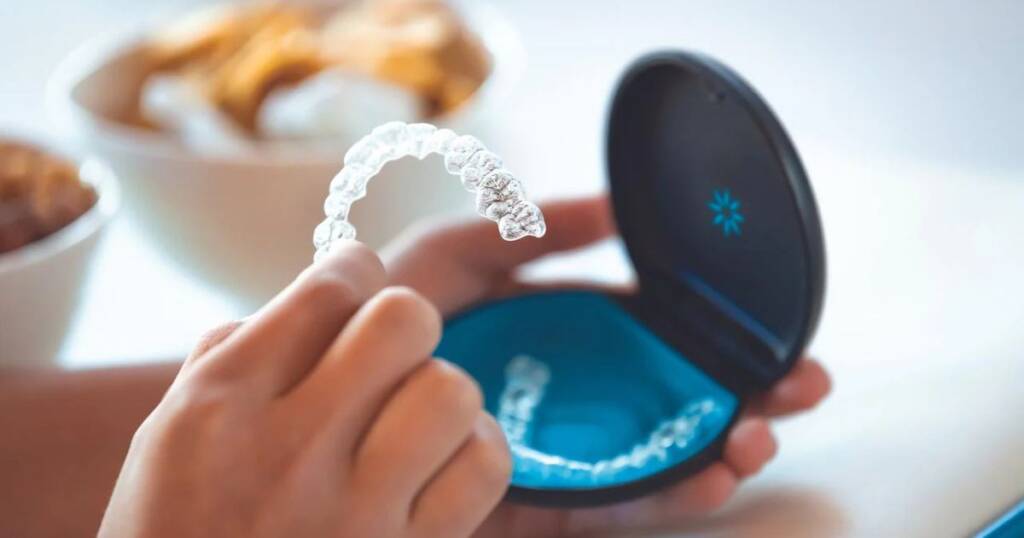
The easy rule of Invisalign users.
Do not eat with Invisalign trays in place, especially of almost all meals and snacks. Rather, take them out, eat and brush your teeth and then put the trays back in.
This is important since when aligners are used in chewing, they may be distorted. The slightest distortion may decrease the effectiveness of the aligners in directing teeth to the required position.
What will become of you eating with Invisalign trays?
When people try eating with Invisalign in place, problems tend to show up fast:
- Risk: breakage of the trays (cracks, sharp edges, deformed fit)
- Trapped food particles increase plaque buildup
- The presence of more bacteria under the aligners would cause bad breath.
- Increased chance of cavities, periodontal illness and weak enamel of teeth.
- Aligners can be stained by sauces or beverages of a colour.
The pressure taken together with an ongoing chewing action will still make the aligners feel out of place even though the tray does not break down, thus it may influence a successful treatment schedule.
The reasons why you should not eat with Invisalign Trays.

Invisalign has removable aligners that are tight against teeth unlike the conventional braces. That is the best type of a tight seal to move the teeth, but crumbs and sugar are the worst.
Also, aligners may be chewed and distorted. Warped invisalign trays have the potential to decrease the effectiveness of your treatment because each set is intended to exert specific forces.
Last but not least, in terms of dental health, entrapment of sugars and acids has the ability to remain on the enamel longer than usual. In the long run, that makes you more likely to have tooth decay particularly when you re-insert aligners without cleaning.
What Will You Drink With Invisalign In? (Water and Beyond)
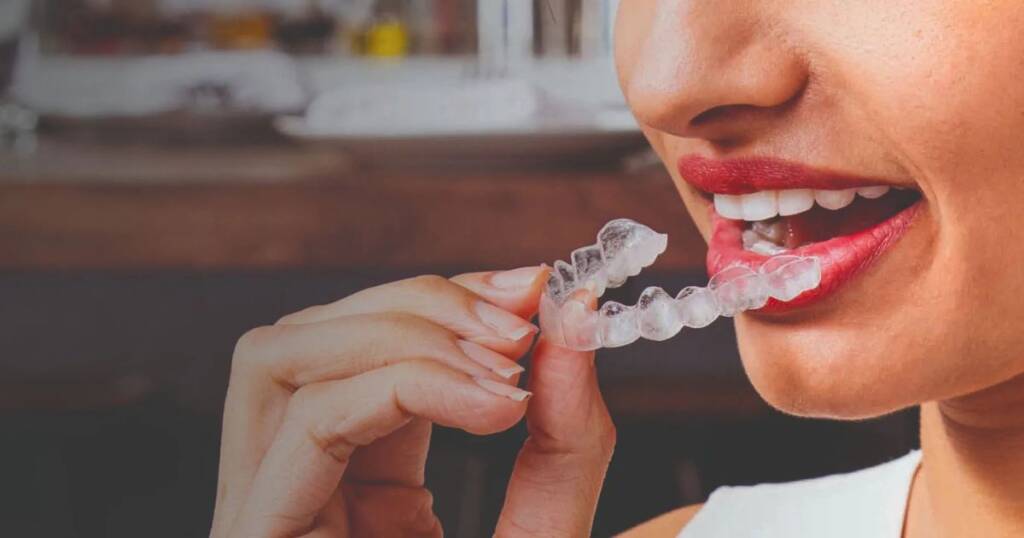
The safest “only beverage”: plain water
When you have your aligners there, the one safe drink to have is plain water. That is to say, take as much water as you can particularly in between meals.
Water aids in the rinsing of the mouth, and it minimizes the exposure of the mouth to acid and contributes to oral health without staining.
Do you drink coffee using Invisalign?
Coffee and Invisalign Coffee can be consumed but you have to take the aligners out first. Coffee is hot and also has a lot of color, thus it can bend trays and stain them.
In case you simply have to drink, you need to wait until it cools down and realize that you are raising the likelihood of staining aligners. To achieve maximum efficiency, take away trays, drink, rinse and clean and reinsert.
Hot drinks, sweet drinks and others.
Aligner plastic can be softened using hot drinks and hot water. In the meantime, sweet beverages (soda, sweet tea, juice) increase the risk of cavities, as sugar becomes stuck between the trays.
Quick drink guide (aligners in)
| Drink | With aligners in? | Why |
|---|---|---|
| Plain water | Yes | Safest for trays + enamel |
| Iced black coffee | Better to remove | Can stain; still acidic |
| Hot coffee/tea | No | Heat can warp aligners |
| Soda / energy drinks | No | Sugar + acid = cavities |
| Wine/beer | Remove if possible | Acid + staining risk |
How to eat with invisalign: a basic meal plan (Step-by-step).
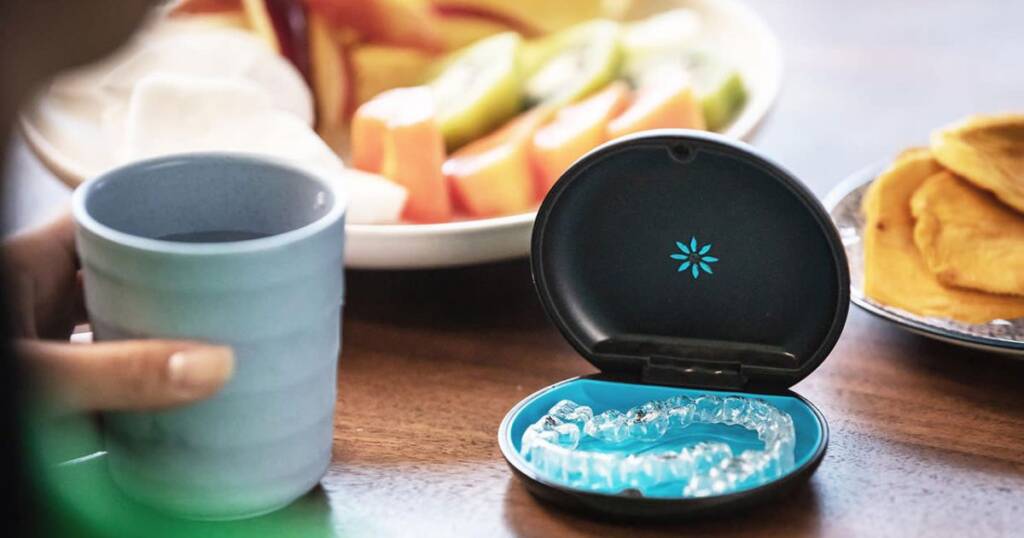
Adhere to this practice and you will safeguard your teeth, aligners, as well as gums.
- Take out Invisaligners prior to meals. Always clean hands, and leave them in case (not in napkin).
- Eat your meal efficiently. Invisalign generally requires long daily wear time (often 20–22 hours/day, depending on your plan). Hence, protracted snacking will decelerate.
- Rinse first if you can’t brush. Rinse water to detach food particles and sugar remaining on enamel.
- brush and floss then put trays in. Clean your teeth and floss, so as not to block the sugars against the enamel.
- Re-insert put aligners. Consistency helps your Invisalign process and orthodontic process.
On-the-go kit: This should include a travel toothbrush, floss, and a small tube of toothpaste. Select a soft toothbrush to safeguard the gums and enamel.
The best foods to consume when having the invisalign.

When teeth feel tender, softer foods help you stay comfortable while still meeting nutrition needs.
Good options include:
- Scrambled eggs, fish, tofu
- Yogurt, soft fruits, oatmeal
- Pasta, rice, vegetables cooked well.
- Smoothies (drink with trays out)
These choices support overall health while reducing stress on sensitive teeth.
Foods to Be Avoided (Even with Trays out)
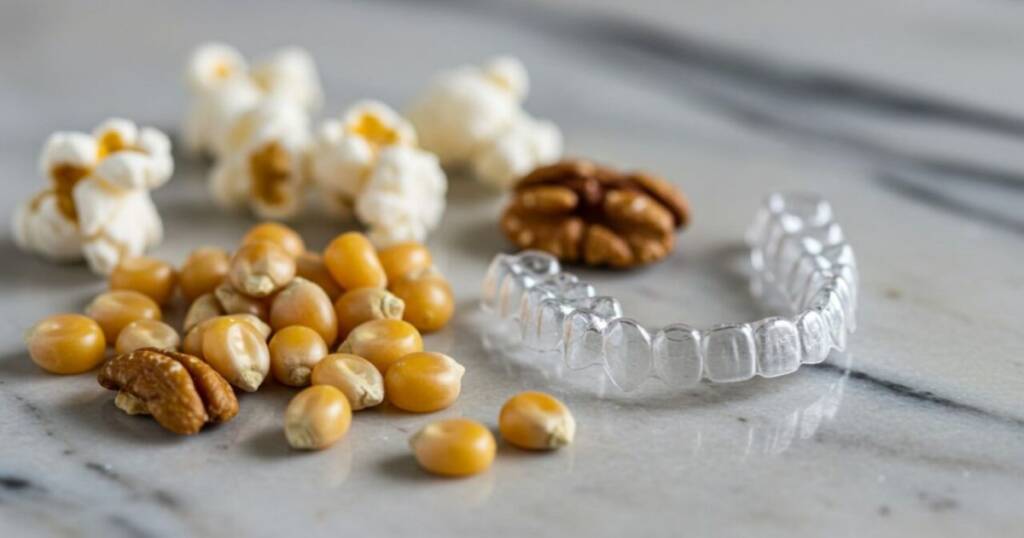
Even removing trays will cause certain foods to increase irritation, risk decay, or other complications in cleaning.
- Sticky foods (caramel, gummies): attach to the teeth and increase the plaque accumulation.
- Sticky and hard foods (bagels, hard bread): they may aggravate soreness and gum irritation.
- Cruncy food (chips, popcorn): the crumbs easily get stuck between the teeth.
- Hard foods (ice, hard nuts): may cause stress to tender teeth:
- Sweet foods: nourish disease-causing bacteria.
Is It possible to chew gum with Invisalign?
Chewing gum should not be done with Invisalign. Gum gets on plastic, captures sugar or sweeteners, and is able to distort the trays.
Provided that aligners are removed, sugar-free gum can be acceptable, in small amounts. Nevertheless, since it promotes snacking habits, it can make the process of wearing and cleaning more difficult.
Guide to Cleaning Aligners (and Preventing Tooth Decay).
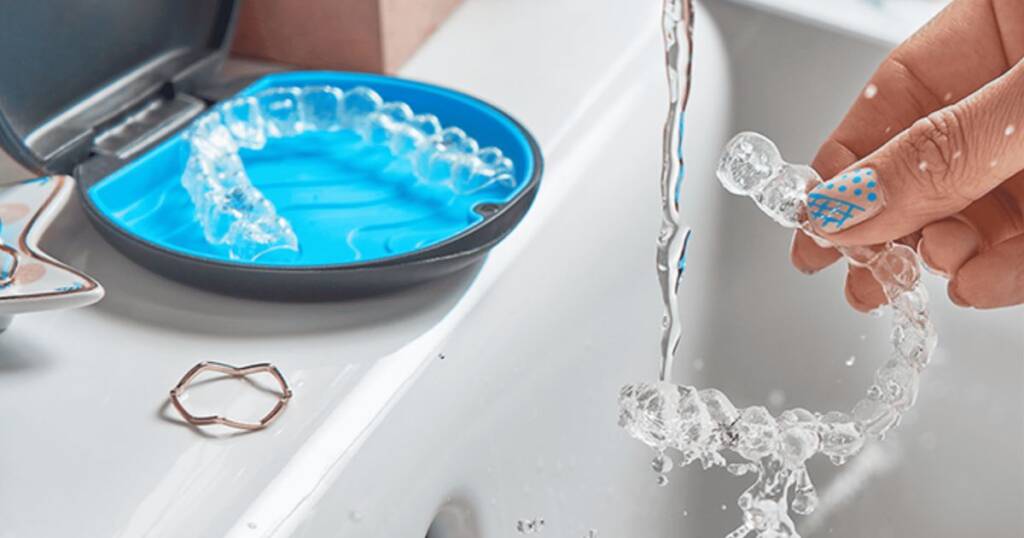
To maintain cleanliness of the aligners and defend the oral hygiene:
- Wash each time you get them off.
- Clean the teeth using a soft toothbrush (do not use hot water).
- Do not use sharp toothpaste which scratches plastic.
- Cleanse teeth with brush and floss, and then put back.
When you put aligners when teeth are not brushed, you entrap sugars and acids. With time, it enhances cavities, gum disease and a constant bad smell.
For Invisalign wear and care basics, see here.
FAQ: Can You Eat With Invisalign? (Snippet-Friendly)
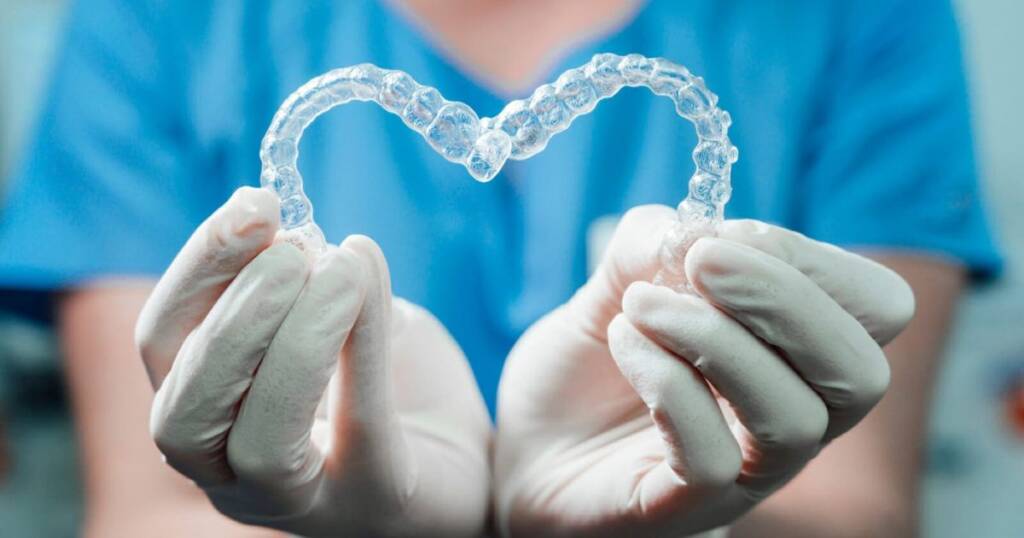
Do you eat with the Invisalign aligners?
In most cases, no. Brush them off so they are not damaged and the chance of decayed teeth is minimized.
Do you drink coffee using Invisalign?
Removal of trays is preferable in order to prevent staining and heating distortion.
Are there any diet restrictions in the Invisalign clear aligners?
Most types of foods can be eaten since aligners can be removed. Nevertheless, cleaning is required and snacking should be kept minimal to safeguard the wear time.
In a word, the Best Way to Eat and Drink With Invisalign
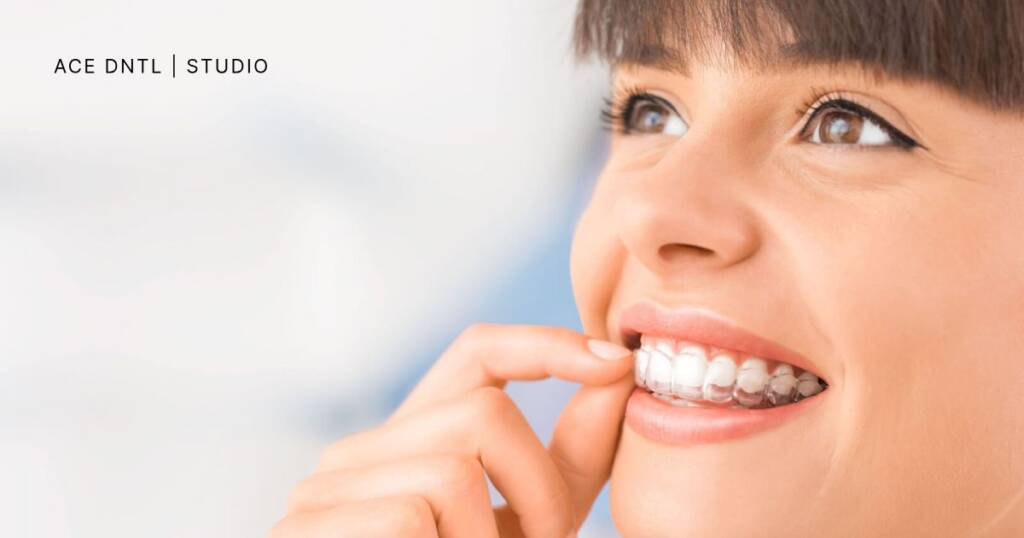
To stay on track, treat your aligners like a “no-food zone.” Can you eat with Invisalign? The trays removal, eat and then clean before inserting again is the most effective most of the time. You end up with less cavity in your teeth, less tooth enamel damage and your Invisalign treatment will continue towards that beautiful smile.
Ace Dntl will assist you should you be in the Costa del Sol and you want to get an Invisalign- Ace Dntl can assist you to get a second opinion regarding your orthodontic treatment. Contact us to schedule an appointment with an orthodontist and we will take you through the process of wearing aligners, dieting, and oral hygiene in the long term.
