The ACE DNTL Veneer: The Recipe Other Clinics Cannot Copy
We are going to tell you exactly what our signature veneer is made of, step by step, including the part most clinics treat as a trade secret. Knowing the recipe and being able to cook it are two different things.
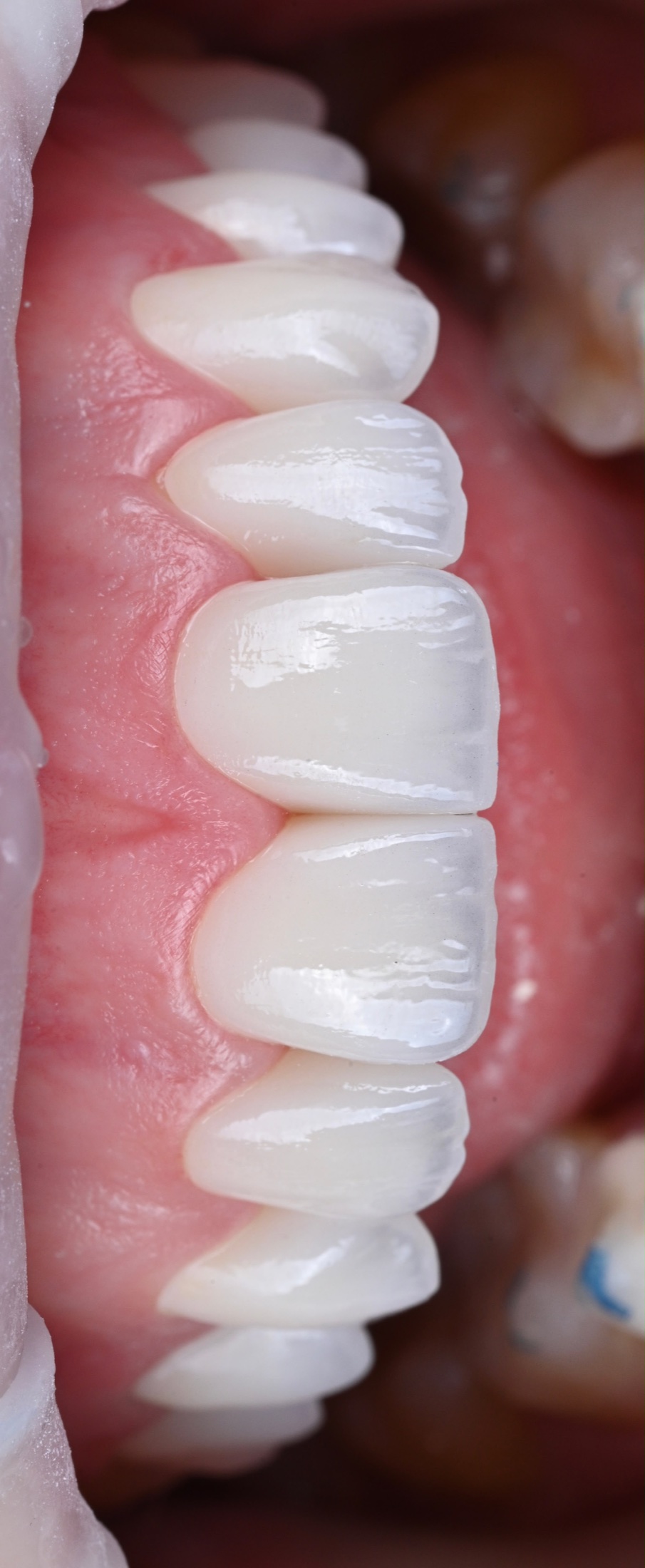
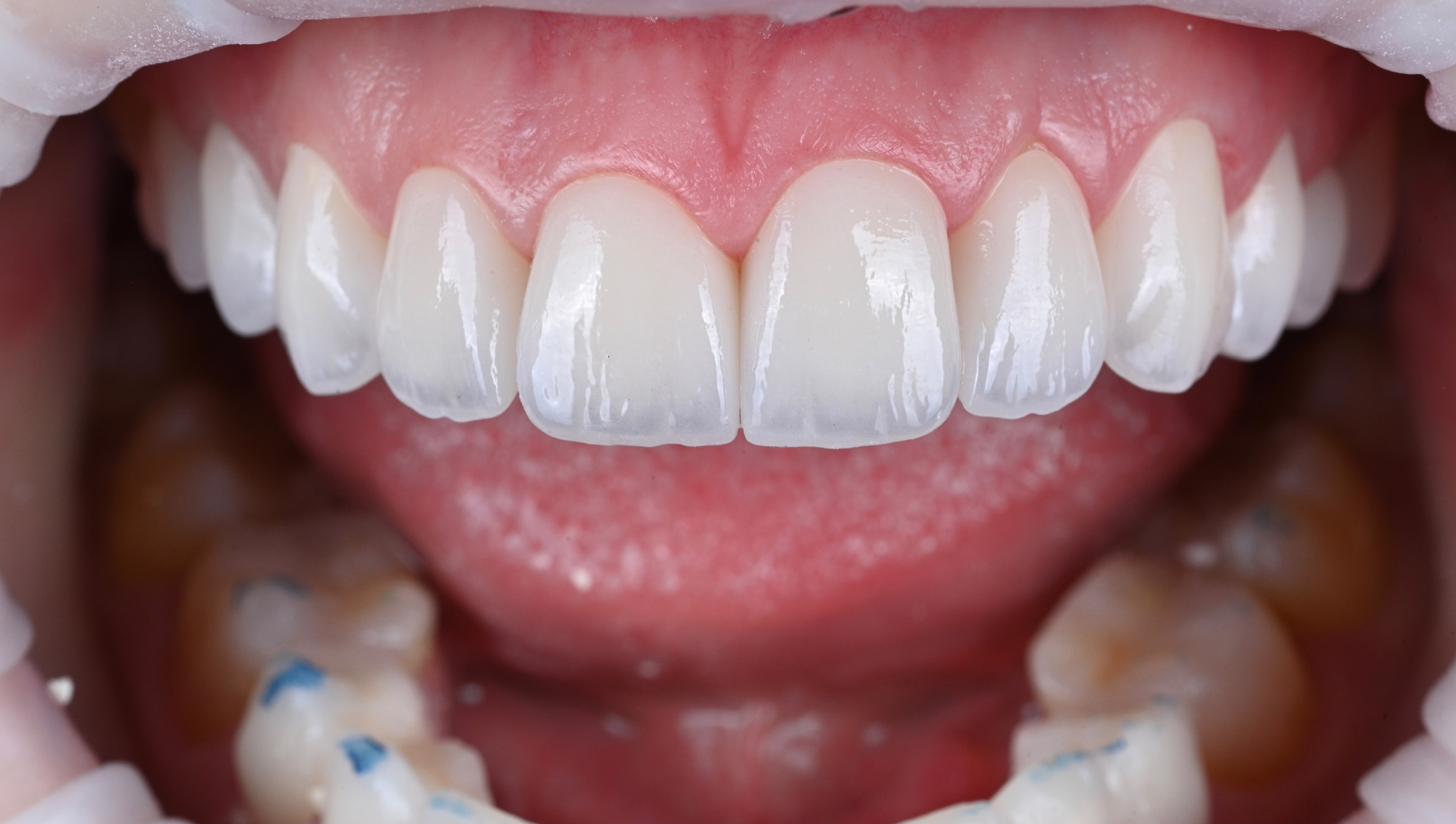
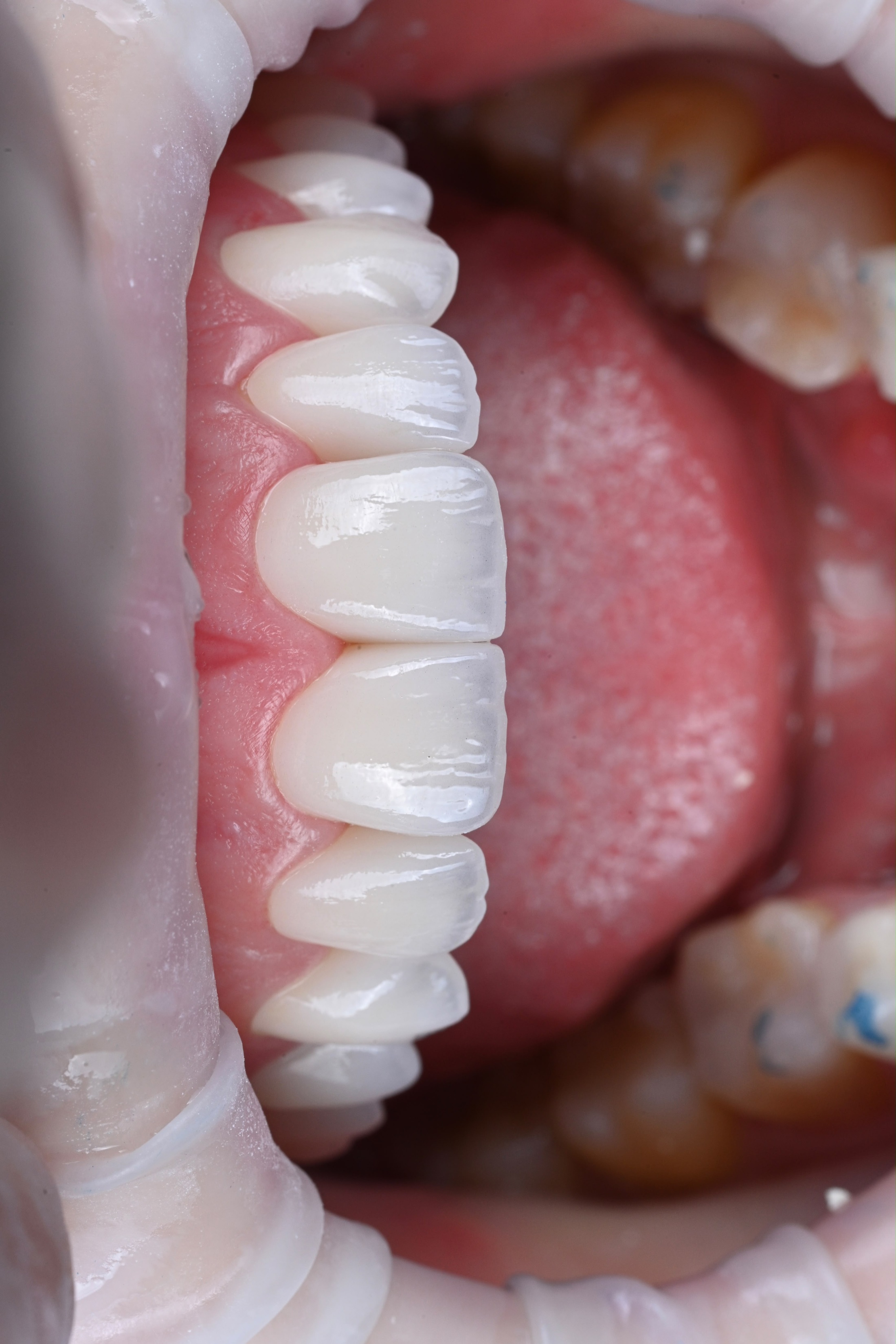
The ACE DNTL Veneer is our signature restoration: a Prettau P4 high-translucency zirconia framework milled in our own laboratory and taken deliberately unpainted off the machine, with no pre-shaded block and no machine colouring, then hand-layered, hand-painted, hand-textured and hand-polished by master ceramists. Our own case data and the ACE Smile Index rate that combination the best-looking, most hygienic and longest-lasting veneer we make.
ACE DNTL STUDIO
THE ACE DNTL VENEER
A study of the signature restoration — Marbella · Estepona · Riviera
Everyone knows Coca-Cola exists. The recipe is more or less public. Nobody makes one that tastes the same. We think about our veneer the same way, which is why this article gives you the whole method rather than hiding behind the word proprietary.
01
What exactly is the ACE DNTL Veneer made of?
It is a high-translucency zirconia base with a fully hand-built ceramic surface. Nothing about the colour comes out of a machine. The block goes into the mill white and neutral, and every particle of shade, depth, halo and texture is added afterwards by a human being with a brush.
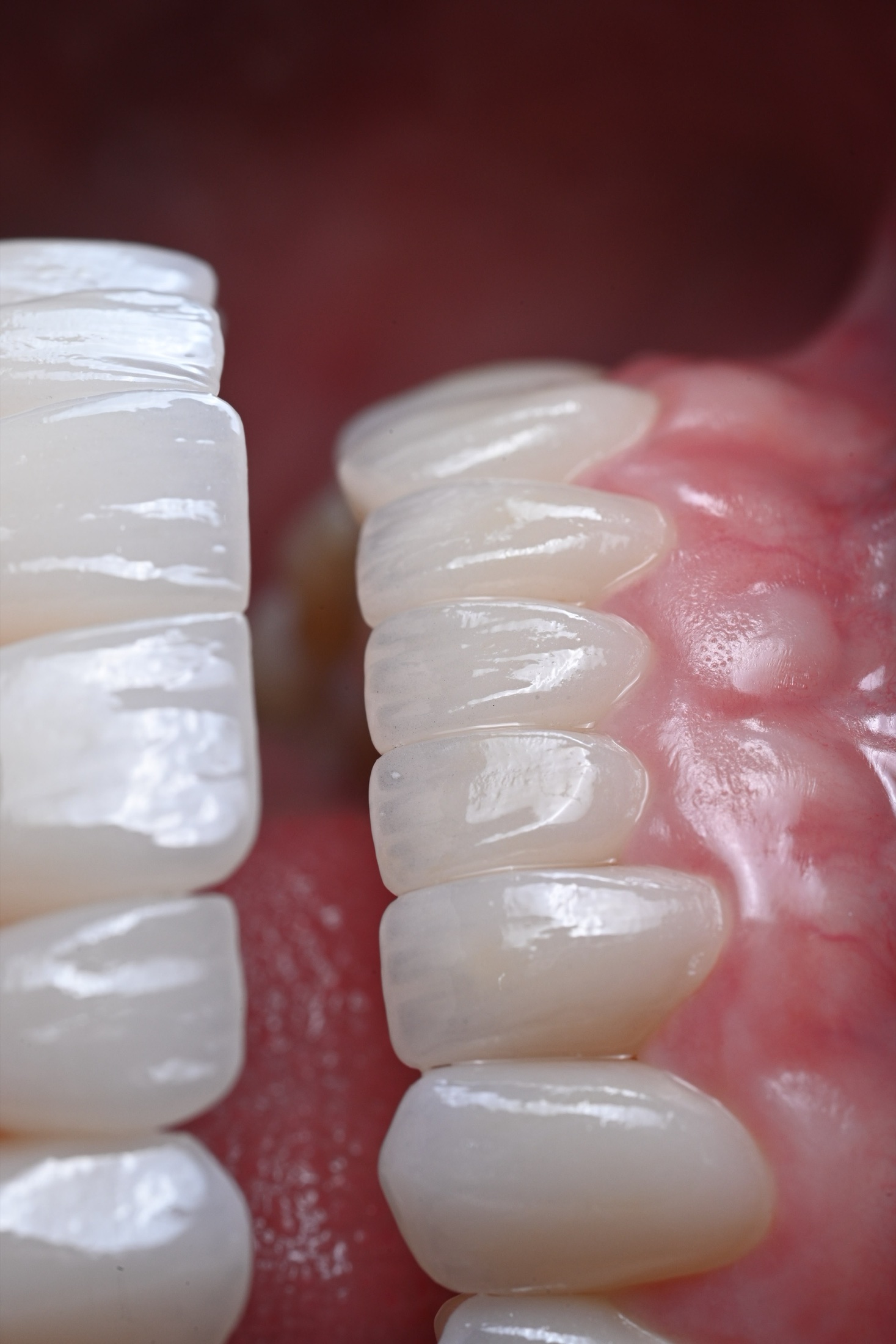
In sequence: we design the tooth digitally from the patient's own facial and functional data, mill the framework from Prettau P4 in our central laboratory, then hand it to a ceramist. The ceramist layers translucent and opalescent ceramics in thin increments, fires them, paints internal effects between firings, builds the incisal halo, then hand-textures the surface so light breaks across it the way it breaks across enamel. The final step is hand-polishing rather than a blanket glaze spray, because a hand-polished surface stays smooth as it wears instead of losing a glaze layer and going dull underneath.
Most laboratories reverse this. They buy a pre-shaded, pre-graded block, mill the finished tooth in one pass, glaze it and ship it. That is a genuinely clever industrial product. It is also why so many veneers look like they came from the same factory, because they did.
02
Why take zirconia out of the machine unpainted instead of using a pre-shaded block?
Because a pre-shaded block decides the colour before it has met the patient. The gradient inside that block was designed for an average tooth, and the veneer then has to be ground into a shape that happens to land the gradient in roughly the right place. Taking the material unpainted means the colour is decided last, in front of the actual face, against the actual neighbouring teeth.
The optical difference is not subtle. Natural enamel is not one colour with a lighter tip. It has internal mamelon shadows, a bluish translucent edge, a warmer cervical zone, occasional white flecks and a halo that is brighter than everything around it. Those are separate optical events at different depths inside the tooth. A milled gradient can imitate one of them. Hand-layering can build all of them, at the correct depth, one firing at a time.
Zirconia earns its place on the other two counts too. Its flexural strength sits comfortably above 600 MPa, against roughly 400 MPa for lithium disilicate and around 100 MPa for feldspathic porcelain, which is what lets us keep the framework thin and the preparation conservative. It also holds a low-plaque surface exceptionally well when it is hand-polished rather than glazed, which matters more at the gumline than most patients are ever told.
The block goes in white. Everything you will ever compliment was added by hand.
03
If you are telling us the ingredients, why can't another clinic just copy it?
Because the ingredients were never the hard part. The unrepeatable parts are the hands, the structure around the hands, and the calendar. Any clinic in Europe can order Prettau P4 tomorrow. Almost none can do what happens after the mill stops.
Three structural things sit behind our version:
- The ceramists. Layering an anterior tooth by hand to a level where it disappears among natural teeth takes years to learn and cannot be rushed at the chairside. Our master ceramists are among the best in Europe and they build a single anterior unit over multiple firings, not in one pass.
- Owning the laboratory. We own our ceramics laboratories. The central lab holds the machines and the ceramists; a design studio sits inside every clinic, with technicians present next to the patient rather than an email away. A shade correction that takes a fortnight of courier trips elsewhere takes an afternoon here.
- The rhythm. A hand-layered anterior unit takes hours of skilled labour that a fast-production model cannot price. That is the real barrier. It is not knowledge, it is economics. A clinic built on volume physically cannot slow down to this speed and stay solvent.
So we publish the recipe with a clear conscience. You can read a great kitchen's recipe card, buy identical ingredients, and still not produce the dish, because the dish was never only the ingredients. If you want to see where the work actually happens, the ACE DNTL ceramics lab is the honest answer to most questions about why our results look different.
04
Is zirconia the wrong choice for front teeth? I have heard it looks opaque
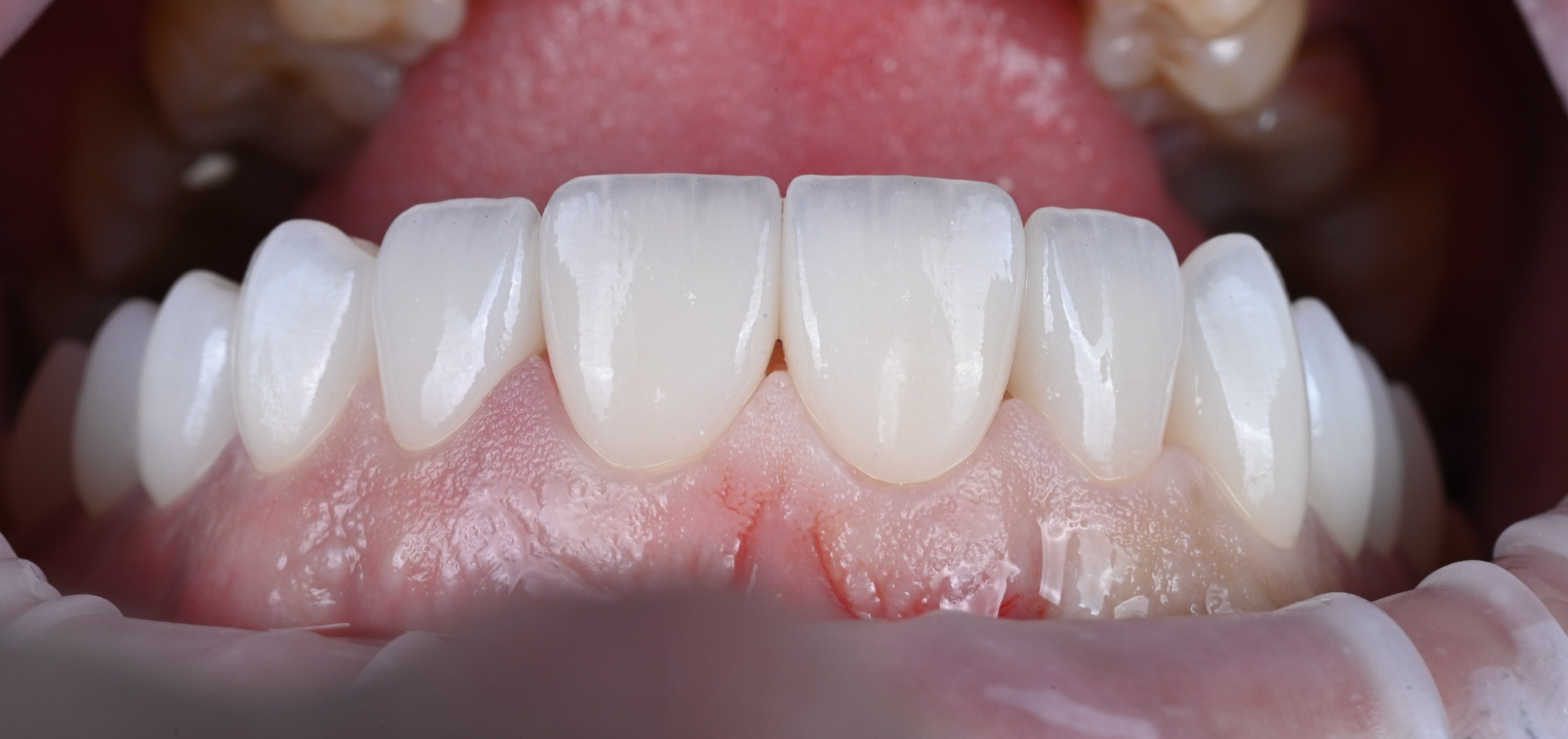
That reputation is real and it was earned, but it belongs to an older generation of material. First-generation zirconia was a strong, chalky, light-blocking white. High-translucency zirconia such as Prettau P4 transmits light in a completely different way, and once it is hand-layered the question of the core material becomes almost invisible to the eye.
We still choose case by case. We use e.max sometimes and hand-layered feldspathic sometimes, and on every single case the surface is hand-layered, hand-painted, hand-stained, hand-textured and hand-polished regardless of what sits underneath. There is no version of our work where a machine finishes the tooth. If you want the longer material comparison, we wrote it out in e.max versus hand-layered porcelain.
| Approach | Where the colour comes from | Optical depth | Typical strength | Surface over time |
|---|---|---|---|---|
| Pre-shaded monolithic zirconia, machine-glazed | Inside the block, decided before the case | Flat, one gradient | Very high (900+ MPa) | Glaze layer wears, dullness underneath |
| Machine-milled e.max, stained only | Block shade plus surface stain | Shallow, stain sits on top | Around 400 MPa | Surface stain can fade with polishing |
| Hand-layered feldspathic | Built entirely by hand | Excellent | Around 100 MPa, needs bonded support | Beautiful, more fragile in heavy bites |
| The ACE DNTL Veneer: unpainted Prettau P4, hand-finished | Built by hand, decided last, in front of the face | Full 3D internal depth | 600+ MPa | Hand-polished, stays smooth as it wears |
My veneers have suddenly gone flat and lifeless. Should I worry?
In most cases this is not urgent and it is not a health problem. Veneers that look flatter than they did are usually showing surface change rather than failure: lost polish, accumulated stain in the ceramic surface, or a worn glaze layer on a machine-finished restoration. That is a cosmetic conversation you can have at your convenience, not an emergency.
Book within a few days, though, if you notice any of these, because they point at something structural rather than optical:
- A veneer that feels rough or catches your tongue on an edge that used to be smooth, which can mean a chip or a lifting margin.
- Sensitivity to cold or to sweet things at a specific tooth, which can mean exposed dentine at a failing margin.
- Gum that bleeds around one veneer only, or has darkened and pulled away.
- Any movement, clicking or a change in how your teeth meet.
- Pain on biting that was not there last month.
At home, in the meantime, drop abrasive whitening pastes entirely. They scratch ceramic surfaces and scratched ceramic looks dull under every light. Use a non-abrasive paste, a soft brush, floss or interdental brushes daily, and if you grind at night, wear the guard. None of that reverses lost glaze, but it stops the problem accelerating.
Is it too late to change material if I have already been quoted somewhere else?
No. Until a tooth has actually been prepared, nothing has been spent that cannot be reconsidered, and a second opinion on material choice is one of the cheapest decisions in this whole process. The expensive moment is irreversible enamel reduction, not a quotation.
What we would genuinely ask you to check on any quote, ours included: how much enamel is being removed, whether the laboratory is owned by the clinic or contracted out, whether a technician will ever see your face, and whether the surface is hand-built or machine-finished. Our own preparation philosophy is conservative and minimal-prep, typically in the region of 0.3 to 0.5 mm where reduction is needed at all, and some cases need none. If a plan involves circling every tooth down to a peg, ask why before you sit in the chair. Our framework for scoring existing work, the ACE Smile Index, is published openly and runs on ten criteria you can apply yourself in a mirror.
How long does an ACE DNTL Veneer take, and what does the process feel like?
Two to three visits across roughly a month. That is the honest timeline, and it is deliberately not faster, because the layering and firing schedule is what produces the depth. Anyone promising a hand-built anterior smile inside a week is describing a different product.
Visit one is diagnosis, photography, scanning and design, with a technician from the in-house design studio available while you are still in the building. Between visits the case is milled and layered in the central laboratory, with try-in stages where you see and approve the shape before the ceramist commits to colour. The final visit is bonding and refinement. You are not handed a surprise at the end; you have signed off on the shape long before the colour goes on. If you are researching the treatment more broadly, our page on porcelain veneers covers cost, candidacy and aftercare in one place.
Dr Ace Korkchi qualified at the University of Gothenburg in 2009 and built this method over the years since, in clinics across Marbella, Estepona and Riviera del Sol, with more than 200 Google reviews. The method is written down, taught internally and now, in this article, given away. We are comfortable with that. The recipe travels easily. The hands do not.
ACE DNTL STUDIO
MARBELLA · ESTEPONA · RIVIERA — ACEDNTL.COM
Direct Answers
- what is the ace dntl veneer
- It is our signature veneer: a Prettau P4 high-translucency zirconia framework milled in our own laboratory and taken unpainted off the machine, with no pre-shaded block and no machine colouring, then hand-layered, hand-painted, hand-textured and hand-polished by master ceramists. Our case data and the ACE Smile Index rate it the best-looking, most hygienic and longest-lasting combination we make.
- is zirconia or emax better for front teeth
- Neither is universally better, and the material matters less than the finish. High-translucency zirconia is stronger (600+ MPa against roughly 400 MPa) and holds a low-plaque hand-polished surface well; e.max has its own strengths and we use it where it fits. On every case we do, whatever the core material, the surface is hand-layered, hand-painted and hand-polished. A machine-finished e.max veneer and a hand-finished one are not the same product.
- why do my veneers look flat and fake
- Usually because the colour was decided inside a pre-shaded block and finished with a surface stain and a glaze spray, which gives one flat gradient instead of the layered internal effects real enamel has. It can also be a worn glaze layer or abrasive whitening toothpaste scratching the surface. Flatness alone is cosmetic, not urgent, but rough edges, sensitivity or bleeding gums around one tooth should be checked within days.
- how long do veneers take at ace dntl
- Two to three visits across roughly a month. The layering and firing schedule is what creates the depth, so it is not compressed. You approve the shape at a try-in stage before the ceramist commits to colour, and the final visit is bonding and refinement.